
Basement insulation in Lynwood CA - a warmer room over walls that stay dry
Basement cold, musty or damp? We check the walls for water first, then put in insulation that keeps the room comfortable and the wall dry.
- Fully licensed and insured.
- Free estimates at your property.
- We reply within 1 business day.
What does insulating a basement in Lynwood involve?
Basement insulation in Lynwood means adding insulation to your basement walls, or sometimes the ceiling, so the room holds its temperature and stays quieter, and on most jobs it starts with checking those walls for water.
Most people call us because the basement is cold, smells musty or has old batts sagging off the wall. The price moves with how much wall there is, whether water needs fixing before anything goes up, how much old insulation has to come out, and whether foam or batts suit your walls, since foam costs more. The schedule turns mostly on that water work and the old material, and the written estimate I give you after seeing the space lays out what needs fixing first and what goes in.
How do you know your basement needs insulation?
Damp spots on the walls
Dark patches, white crust or peeling paint on the concrete usually mean water is working through or around the foundation. If you insulate over it, the wall stays wet behind the new material, where you can't see it getting worse.
A musty smell downstairs
That smell usually comes from moisture held in old insulation, carpet or framing. The longer it sits, the further it soaks into whatever is stored or built down there.
Cold floors over the basement
When the floors above stay cold and the room downstairs never feels right, heat is moving out through bare or thinly insulated walls. Every month you wait shows up on the power bill.
How we do basement insulation
Water comes first, so before we pick a material I go over the walls for stains, damp spots, crumbling paint or anything else that says water is getting in. If it is, that gets fixed and steered away from the foundation before any insulation goes up, because covering a wet wall only hides the problem for the next person. Where there's any damp at all, we lean toward foam on the wall over batts, and I talk through with you how the foam will be covered. On the day, our crew pulls out old insulation that's wet or dirty, seals the gaps around pipes and wiring, puts the new material in and cleans up.
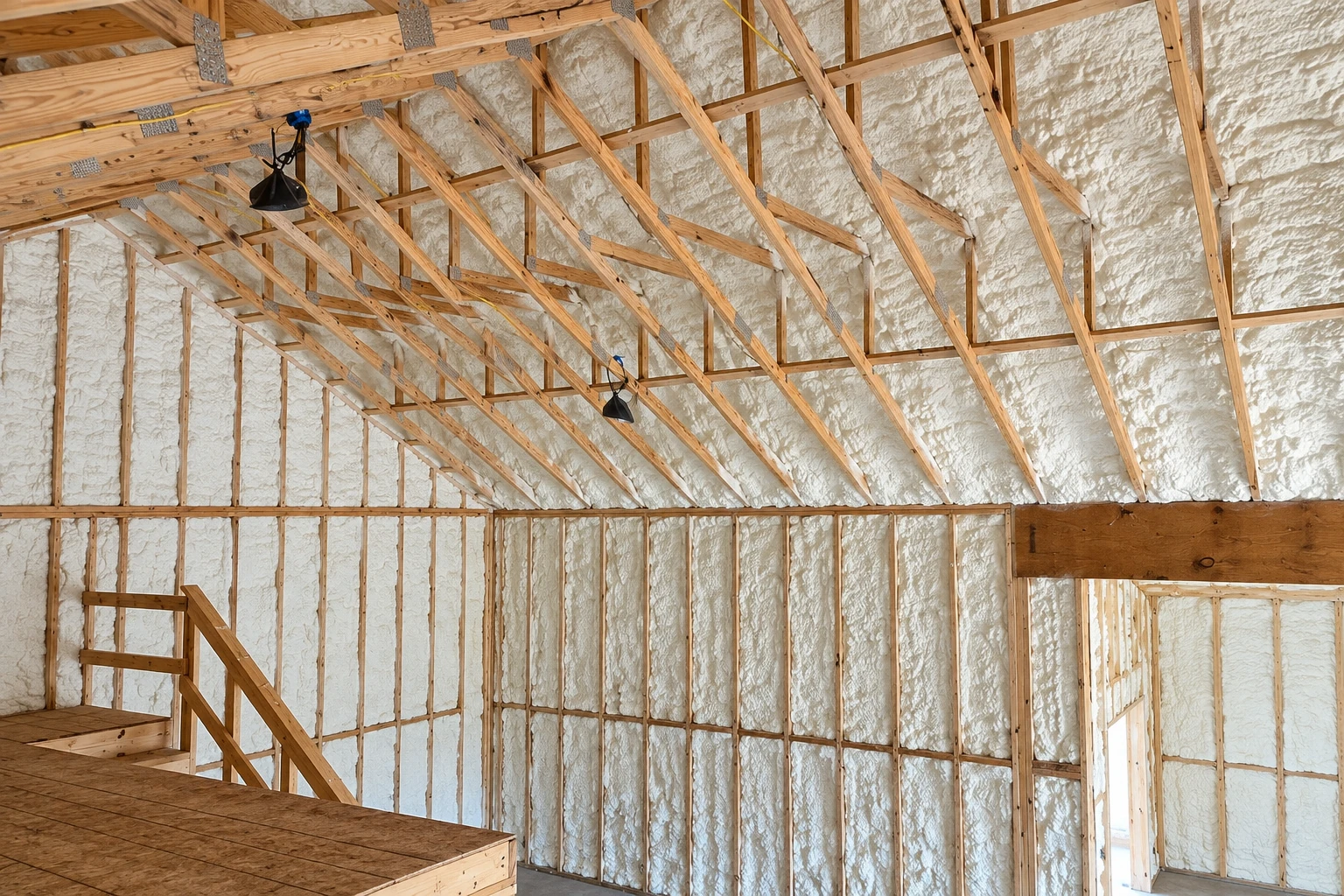
On a wall that's shown damp, the foam we usually use is closed-cell foam insulation, which is dense enough to block moisture while it insulates. Where a wall stays dry and you mostly want comfort and quiet, open-cell foam insulation is lighter and usually costs less.
Closed-cell foam on the wall
This suits a basement that's shown any damp, because the foam goes right onto the concrete and keeps moisture out of the wall. It costs more than batts, and it needs a covering before the room is finished.
Batts in a framed wall
This suits a basement that has stayed dry, where you're framing walls and hanging drywall anyway. It costs less, and I'll go over what should and shouldn't go over the batts before we start.
Foam boards on bare concrete
Boards suit a flat, dry wall when you want insulation without framing it out. They have to sit tight against the concrete, so the wall needs to be sound before they go up.
Get a written plan for your basement walls
We reply within one business day to set a time. I come out, look at your walls in person and give you a free written estimate at your property, with no obligation to go ahead.
(424) 338-0203- Based in
- Lynwood, CA 90262
- Hours
- Mon–Sun: 7 AM–11 PM
What happens after you call us about your basement?
Here's how a basement job runs from your first call to the final walk-through, with the price in writing before any work starts.
Call us and set a time
Call or send the form, and I'll set a time to come out and see the basement with you. I don't price anything until I've looked at the walls in person.
Walk the basement together
I look over the walls for any sign of water and ask how you plan to use the room. You get a written estimate that says what needs fixing first, what goes in and what comes out, so you know the cost before anything starts.
Prep and install in order
Our crew covers your floors and the paths through the house, then does the prep in order, so old wet insulation is out before anything new goes up. Then the insulation goes on the walls, and any foam gets its covering.
Walk the finished basement
Before we pack up, I walk the finished space with you so you can see the walls, the covering and the cleanup. If something doesn't look right to you, that's the time to point it out.
Why Lynwood homeowners call us for basement insulation
The owner looks at your walls
I come out myself to look at your basement and write the estimate, and I'm on site running our small crew when the work happens. The person who priced your job is the one making sure it's done the way it was written.
Fully licensed and insured
We're fully licensed and insured. That matters when a crew is working inside the house where your family lives, around your wiring, your stored things and your gas appliances.
Lived-in homes since 2023
I spent my first years insulating new houses with every wall wide open, then started this business in 2023 to work in homes people already live in. Those houses come with old wiring and whatever the last crew left behind, and that's the work we're set up for.
Based in Lynwood, working nearby
We're based in Lynwood and work in many of the cities and county areas around it, not only the ones with a page here. Most of our calls come from homeowners close by, along with some landlords and property managers.
When you're ready, reach us through our contact page or call (424) 338-0203, and I'll set a time to come look at the walls with you.
Basement and crawl space insulation in Lynwood
The City of Lynwood's Building and Safety Division issues building permits for construction, alterations and repairs to buildings in the city, and its inspectors check work on site against the codes. Whether your basement job needs a permit isn't something I'll guess at from here, so if you want to ask, that's the office to call. When a job does need one, we pull it and set up the inspections, whether the office belongs to the city or the county.
Plenty of houses around here sit on a raised floor over a crawl space instead of a full basement, so tell us which one you have, because under a raised floor the job is usually crawl space insulation and the work is different. We meet the same older houses, with the same leaks and tired old insulation, on jobs in South Gate and Downey, and the order of the work stays the same.
Questions about basement insulation in Lynwood
How much does basement insulation cost in the Los Angeles area?
Insulating a basement in the Los Angeles area usually costs about $1.50 to $4.50 per square foot, which is the going rate for the area, not our price. Where your job lands depends mostly on the material, since foam costs more than batts, and on any water work or old insulation that has to come out first. Insulation needs no upkeep once it's in, so the installation is the cost you plan for, and your own figure comes in the written estimate.
Who can install insulation in California?
In California, installing insulation for temperature or sound control falls under the C-2 Insulation and Acoustical class of the Contractors State License Board. State law also counts work on a basement as home improvement, and a home improvement contractor is one licensed by that board, so the person you hire for this job should hold a board license.
Should a basement wall get a plastic vapor barrier?
Usually not behind fiberglass, because plastic sheeting on the inside of the batts in a basement can trap moisture inside the wall. You can ask for Kraft-faced batts, which carry a paper facing, or latex paint on the drywall instead.
What is the best way to insulate a damp basement wall?
Fix the water first, then use closed-cell spray foam, which building research found gives the best moisture control of the insulations that go on the inside of a foundation wall. Fiberglass or cellulose against a damp wall can stay wet. Open-cell foam has to go on thicker to give vapor protection, so it takes more foam to do the same job.
Does spray foam in a basement have to be covered?
Yes, spray foam has to be covered with ignition-barrier paint, which is a fire-protective coating, or with gypsum board. How the foam will be covered is a fair question to ask any contractor before you hire them.
How do I decide whether to insulate the basement ceiling or the walls?
Start with how you'll use the room, because federal building guidance limits basement ceiling insulation to homes in a dry climate where the basement won't be living space. If you'll be spending time down there, that usually points to the walls, so tell us your plans when you ask for an estimate.
Foam insulation that pairs with basement work
If any part of your basement wall has shown damp, this dense foam goes straight onto the concrete and keeps moisture from getting into the wall.
A softer, lighter foam that fills framed walls and quiets sound between floors, a good fit where the space stays dry and moisture isn't the worry.
Cities we serve around Lynwood
Lynwood Spray Foam Insulation is based in Lynwood, California, and 12 cities have their own page here, including South Gate and Compton. We also work in many other cities and county areas nearby, so call even if yours isn't listed.
Lynwood, CA
Get your basement walls checked first
Call (424) 338-0203 or use the form, and tell us roughly how big the basement is and whether you've seen water on the walls, so I know what to look for when I come out.